Contractor troubleshooting a countertop appliance with a multimeter and hand tools in a neutral kitchen

Small appliance service • Baton Rouge

Small Appliance Repair Baton Rouge

Describe what the appliance is doing once, and we'll connect you with a local contractor in the Baton Rouge area who handles small appliance diagnosis and repair.

CALL NOW: +1 225 422 7157
Describe the symptoms once Connect with a local contractor Discuss diagnosis directly You decide how to proceed
Baton Rouge Small Appliance Referral

Understanding the problem

Get connected for small appliance repair in Baton Rouge

When a small appliance quits, the hard part is often figuring out who will actually take the job. appliance repairs baton rouge is a referral service: we answer your call, take the details, and connect you with an independent local contractor who works on small appliances.

Small appliance repair usually means diagnosis first, then a targeted fix: replacing a worn belt, clearing a jam, testing a thermal fuse, or tracking down a loose wire or failed switch. Many issues look similar from the outside, so a good repair starts with simple checks—power, plugs, airflow, clogs, and obvious damage—before parts get ordered.

This page focuses on small appliance repair Baton Rouge homeowners commonly need for kitchen and laundry tasks, including:

  • Microwaves (countertop units)
  • Blenders, mixers, and food processors
  • Toasters and toaster ovens
  • Coffee makers and espresso machines
  • Air fryers, slow cookers, and pressure cookers
  • Small vacuums and carpet spot cleaners
  • Dehumidifiers and portable fans
  • Ironing and garment-care appliances

If you're dealing with a full-size refrigerator, range, dishwasher, washer, or dryer, that is usually handled as a different category of work. For a broader overview, many homeowners start with appliance repair in Baton Rouge so the right kind of contractor gets involved from the beginning.

CALL NOW: +1 225 422 7157
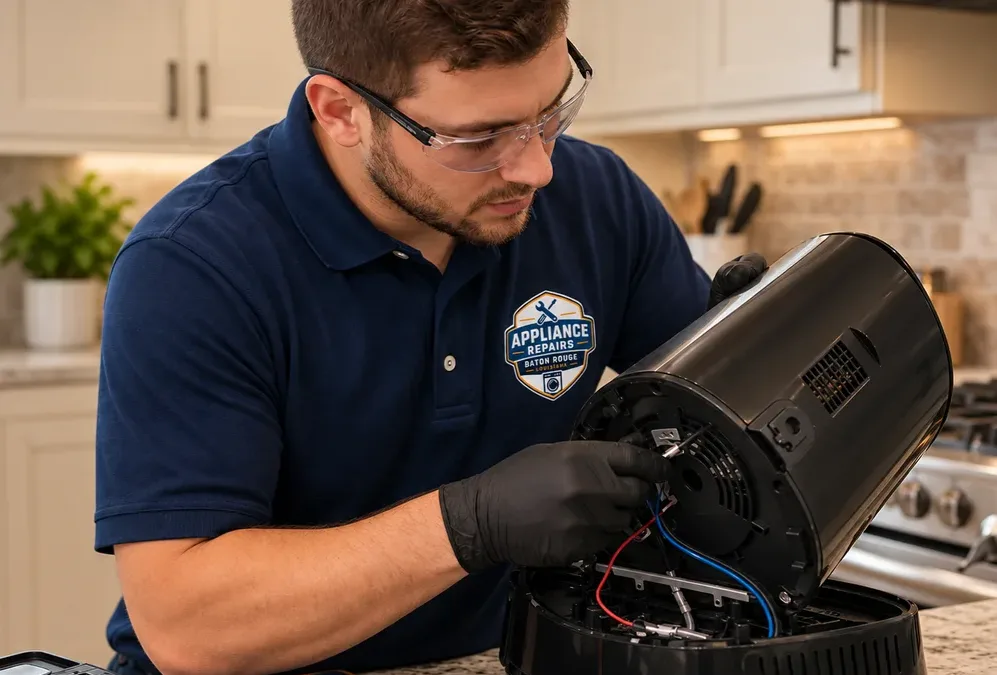
Contractor opening a countertop appliance to access its wiring and thermal fuse with tools arranged nearby
Internal component diagnosis

Service details

What a repair call typically covers

CALL NOW: +1 225 422 7157

Symptom-based diagnosis

The contractor narrows the issue from what you observe: dead unit, intermittent power, burning smell, loud noise, weak suction, poor heating, or error lights.
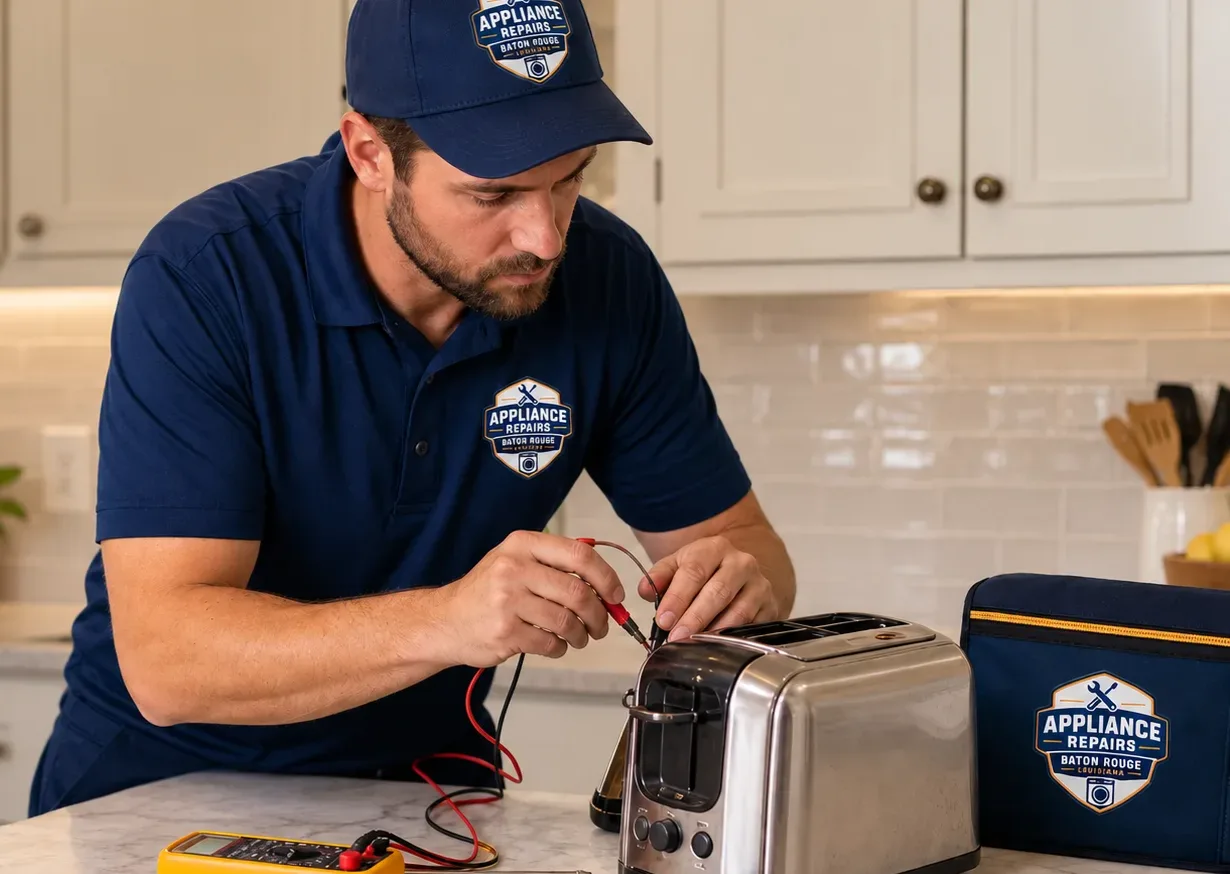
Electrical and safety checks

Expect checks for damaged cords, overheated connections, blown fuses, failed switches, and issues that can trip a GFCI outlet in kitchens, baths, and laundry areas.

Mechanical wear parts

Belts, couplers, bearings, gears, latches, and small motors wear down. A repair often comes down to identifying the worn component and confirming the rest of the assembly is sound.

Cleaning and airflow problems

Clogs, packed lint, grease buildup, and blocked vents can cause overheating or shutdowns in items like vacuums, dehumidifiers, and small cooking appliances.

Parts sourcing and model matching

Small appliances can vary widely by model. Having the model number and brand ready helps the contractor confirm compatibility before any parts replacement.

From call to contractor

How getting connected works

01

Call and describe the appliance

Share what the unit is, the brand and model if you have it, what it's doing, and what you've already tried, such as another outlet, a reset, cleaning, or a filter change.

02

We match you with a local contractor

Based on the appliance type and symptoms, we connect you with an independent contractor who takes on small appliance repair jobs in the Baton Rouge area.

03

You talk details directly

The contractor can ask follow-up questions, explain likely causes, and tell you what they'd want you to have ready for diagnosis.

04

You decide how to proceed

Any recommendations, parts decisions, and scheduling happen between you and the contractor you're connected with.

CALL NOW: +1 225 422 7157

If you're searching small appliance repair Baton Rouge homeowners can actually get scheduled for, one phone call is the simplest way to reach a local contractor who handles this kind of work.

CALL NOW: +1 225 422 7157

Work and component details

Small appliance repair issues contractors see often

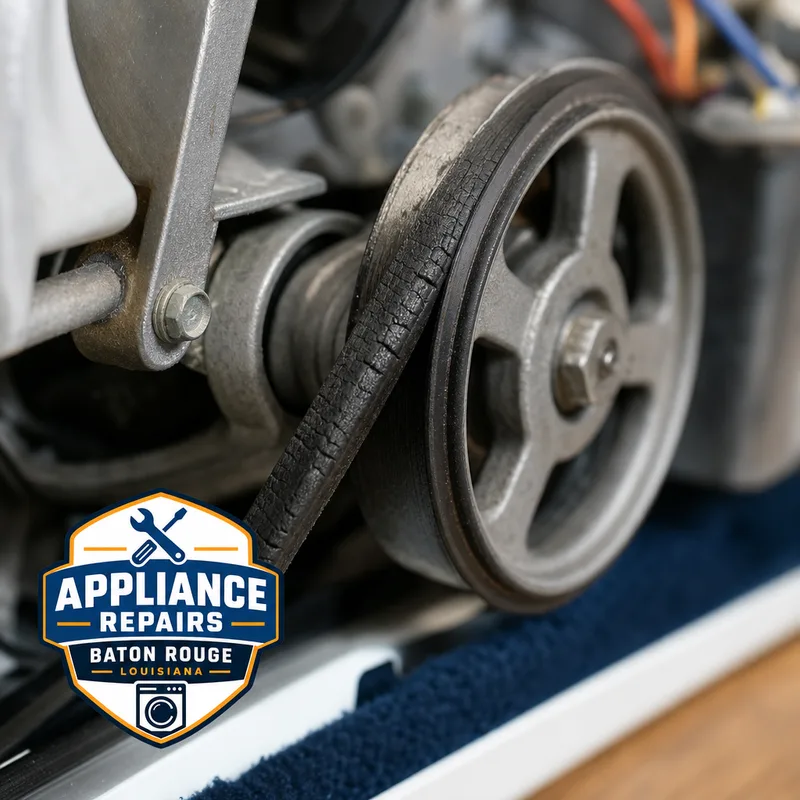
Close-up of a worn rubber drive belt and pulley showing cracking and glazing inside a small appliance
Worn belts and couplers are common in mixers, vacuums, and similar appliances.
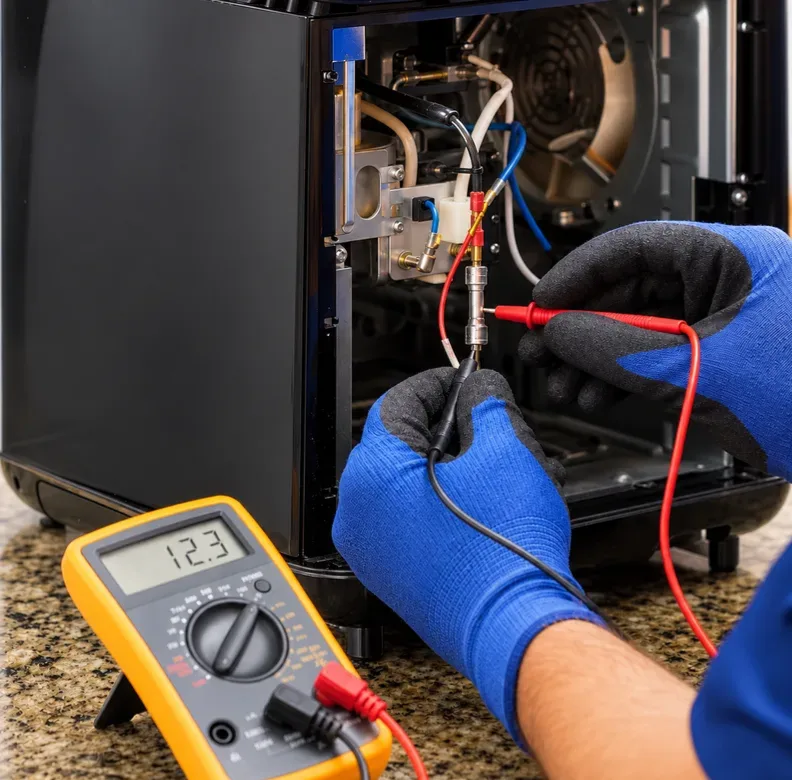
Thermal fuse and wiring harness being tested with a multimeter inside a small countertop cooking appliance
Overheating and dead-unit symptoms often trace back to fuses, switches, or connections.
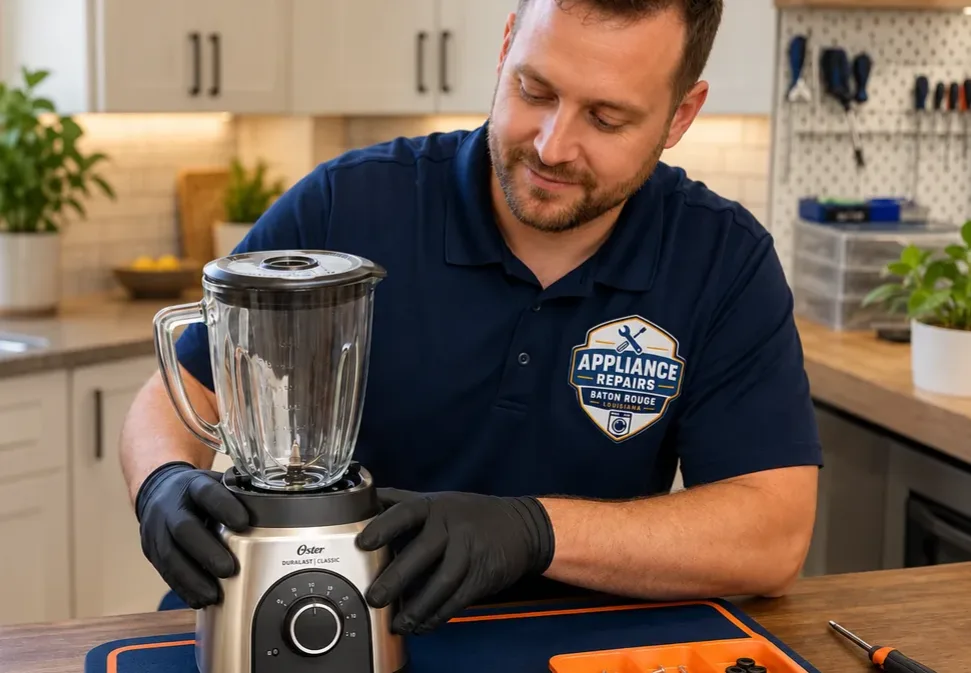
Reassembled small appliance on a work mat with sorted screws ready for a final function test
A proper repair ends with reassembly checks and a basic function test.

Questions before calling

Small appliance repair FAQs

What information should I have ready when I call about a small appliance?
Having the brand, model number, and a clear description of the symptom helps the contractor start with the right diagnosis path. If you can, note whether the unit powers on at all, whether any lights or beeps occur, and what changed right before the problem, such as a new outlet, power flicker, heavy load, deep cleaning, or a dropped unit. Photos of the rating label and any visible damage are also useful when you speak with the contractor.
The appliance is completely dead. What does a contractor usually check first?
A dead small appliance is commonly approached by checking the outlet and cord first, then moving to the switch, fuse, and internal connections. Many kitchen and laundry outlets are GFCI-protected; a tripped GFCI can make a unit appear failed. If the outlet is confirmed good, the contractor may test continuity through the power cord, switch, and any thermal cutoff devices.
Why does my small appliance run but not heat, blend, or spin like it should?
When a unit powers on but the main function is weak or missing, the problem is often mechanical wear or a failing component under load. Examples include stripped gears, worn couplers, weak capacitors in some motor designs, slipping belts, or a failing heating element or thermostat. The contractor typically confirms the symptom under safe conditions and then checks the most failure-prone parts for that model.
Is it worth repairing a small appliance, or should I replace it?
The decision usually comes down to the specific failure, part availability, and whether the rest of the unit is in good condition. A contractor can tell you whether the issue points to a single replaceable component, such as a switch, belt, or latch, or whether the failure is tied to hard-to-source parts or heat damage that tends to recur. You stay in control of the decision after hearing the contractor's findings.
What should I do before the contractor works on the appliance at my home?
Unplug the unit, clear counter space or a small work area, and set aside any attachments—bowls, blades, filters, or hoses—that relate to the symptom. If the issue is a clog or airflow problem, avoid running the appliance repeatedly; overheating can damage additional components. If you still have the manual or a record of the model, keep it nearby for reference.
Can you connect me with someone for small appliance repair in Baton Rouge even if I'm not sure what's wrong?
Yes. You don't need to diagnose it first; describing what you're seeing and hearing is enough to start. We'll take the basics and connect you with a local contractor who can ask the right follow-up questions and guide the next steps.

One call starts the connection

Ready to get your small appliance looked at?

Call and describe the appliance and the symptoms once. We'll connect you with a local contractor serving the Baton Rouge area who can take it from there.

CALL NOW: +1 225 422 7157